AI Marketing Analytics Platforms 2026: 6 Tools That Turn Campaign Data Into Action
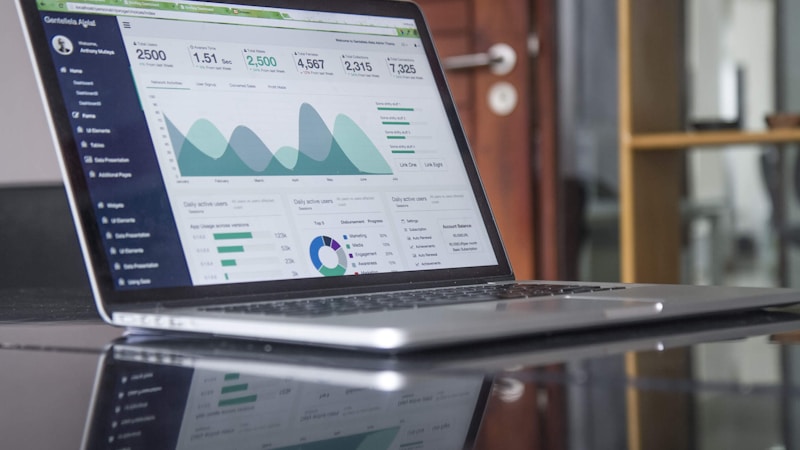
Marketing teams in 2026 are drowning in data from 10+ platforms — Google Ads, Meta Ads, email, SEO, social media, CRM, website analytics — and most cannot answer the basic question: which marketing activities actually generate revenue? AI marketing analytics tools promise to solve this by connecting data sources, attributing revenue to marketing touchpoints, predicting campaign outcomes, and recommending budget allocation. After testing six platforms, we found the promise is real but implementation matters enormously.
1. Google Analytics 4 with AI — Best Free Marketing Analytics
GA4's AI features have matured significantly since launch. Predictive audiences automatically identify users likely to purchase, churn, or spend above a threshold in the next 7 days — allowing targeted remarketing before the behavior occurs rather than after. The AI-generated insights surface anomalies and trends without manual dashboard monitoring: "Mobile traffic from organic search increased 34% this week compared to baseline — primarily driven by three blog posts ranking for new keywords."
The natural language query feature lets marketers ask questions in plain English: "What was my conversion rate from paid social last month?" returns an instant answer without navigating reports. For teams where only one person knows GA4's complex interface, this democratization of data access is genuinely valuable.
Being free, GA4 is the baseline every marketing team should have. The limitation is cross-channel: GA4 sees your website data but does not natively combine it with email platform data, ad platform data, or CRM data without additional tooling.
Pricing: Free (standard). GA4 360 at custom pricing (enterprise).
2. Mixpanel — Best for Product-Led Marketing Analytics
Mixpanel excels at tracking user behavior within your product and connecting that behavior to marketing sources. For SaaS companies and product-led growth businesses, understanding which marketing channels bring users who actually engage with the product (not just sign up and leave) is critical. Mixpanel's AI features identify behavioral cohorts that correlate with retention, predict user lifetime value based on early engagement patterns, and recommend which marketing channels to invest in based on downstream user quality rather than just acquisition cost.
The Signal report uses AI to identify which user actions correlate most strongly with long-term retention. If users who complete the product tutorial within 24 hours retain at 3x the rate, Mixpanel surfaces that insight so marketing can optimize for tutorial completion rather than just signups.
Pricing: Free (up to 20M events). Growth at $28/month. Enterprise at custom pricing.
3. Amplitude — Best for Experimentation and AI Predictions
Amplitude combines product analytics with AI-powered experimentation. The Predict feature uses machine learning to forecast user behavior — which users will convert, which will churn, which will upgrade — based on behavioral patterns. Marketing teams use these predictions to personalize campaigns: predicted churners get retention campaigns, predicted upgraders get premium feature highlights.
The Experiment module runs A/B tests with statistical rigor, and AI recommends which tests to run based on predicted impact. Rather than testing random hypotheses, the AI identifies the changes most likely to improve target metrics and prioritizes experiments accordingly.
Pricing: Free (limited). Plus at custom pricing. Enterprise at custom pricing.
4. Heap — Best for Auto-Captured Event Analytics
Heap automatically captures every user interaction on your website and app without manual event tagging. The AI layer analyzes this complete behavioral dataset to identify conversion patterns, friction points, and optimization opportunities that manually instrumented analytics would miss. The "aha moment" analysis uses AI to identify the exact sequence of actions that separate users who convert from users who do not.
For marketing teams without engineering resources to implement detailed event tracking, Heap's autocapture eliminates the tracking bottleneck. Every click, page view, form submission, and interaction is captured retroactively — meaning you can answer questions about past behavior without having set up tracking in advance.
Pricing: Free (up to 10K sessions). Growth at custom pricing. Pro at custom pricing.
5. Funnel.io — Best for Marketing Data Integration
Funnel.io connects 500+ marketing data sources (ad platforms, CRM, email, SEO, social, analytics) into a unified dataset. The AI layer normalizes naming conventions, currency, and attribution across sources, then generates cross-channel reports that show true marketing ROI. For marketing teams spending across Google, Meta, LinkedIn, TikTok, email, and SEO, Funnel.io provides the unified view that individual platform dashboards cannot.
The AI-powered anomaly detection flags significant changes across any connected data source. If your Google Ads CPC spikes 40% on Tuesday, Funnel.io alerts you with context — competitor activity, auction changes, quality score shifts — rather than leaving you to discover the problem in your weekly report.
Pricing: Free (limited). Essentials at $380/month. Plus at $1,150/month. Enterprise at custom pricing.
6. Triple Whale — Best for E-commerce Marketing Attribution
Triple Whale is built specifically for e-commerce marketing attribution. The AI attribution model connects ad spend across all platforms to actual purchases, providing a unified ROAS view that individual ad platform dashboards overcount. The first-party pixel captures purchase data independently of platform tracking limitations (iOS privacy, cookie deprecation), providing more accurate attribution than platform-reported metrics.
The AI-powered budget allocation recommends how to redistribute marketing spend across channels based on actual contribution to revenue. If Google Shopping is delivering $5 ROAS while Meta is delivering $2 ROAS, Triple Whale recommends specific budget shifts and predicts the revenue impact. For e-commerce brands spending $10K+ monthly on ads, this optimization guidance pays for the subscription many times over.
Pricing: Growth at $129/month. Pro at $199/month. Enterprise at custom pricing.
Comparison Table
| Tool | Best For | AI Strength | Price/Month |
|---|---|---|---|
| Google Analytics 4 | Baseline analytics | Predictive audiences | Free |
| Mixpanel | Product-led growth | Behavioral cohort AI | Free-$28 |
| Amplitude | Experimentation | Behavior prediction | Free-Custom |
| Heap | Auto-captured data | Pattern discovery | Free-Custom |
| Funnel.io | Cross-channel data | Anomaly detection | From $380 |
| Triple Whale | E-commerce attribution | Budget optimization AI | From $129 |
Frequently Asked Questions
Do I need a marketing analytics platform if I have Google Analytics?
GA4 covers website behavior analytics well. You need an additional platform if you want cross-channel attribution (connecting ad spend to revenue), product analytics (in-app behavior tracking), or marketing data integration (unified reporting across 10+ platforms). Most marketing teams above $5K/month ad spend benefit from a dedicated analytics platform.
What is the best marketing attribution model in 2026?
AI-powered multi-touch attribution (used by Triple Whale, Funnel.io) is more accurate than last-click or first-click models. These models use machine learning to weight each marketing touchpoint's contribution to conversion. No attribution model is perfect, but AI-powered models are the least wrong — which is the most you can ask for in attribution.
For related tools, see our guides on AI SEO tools and AI email marketing.